Software & tools
Credit packages vs subscriptions: which billing model fits your studio?
A decision guide for class-based studios choosing between credit packages and monthly subscriptions — cash flow, retention trade-offs, and how a hybrid wallet works in practice.
The single biggest financial decision most class-based studios make is not pricing — it is billing model. Should you sell credit packages (10-class packs, 5-class packs, single drop-ins)? Should you sell monthly subscriptions (unlimited or class-limited)? Or both?
There is not one right answer. There is a right answer for your studio, given your niche, your client travel patterns, and what you want your cash flow to look like next quarter.
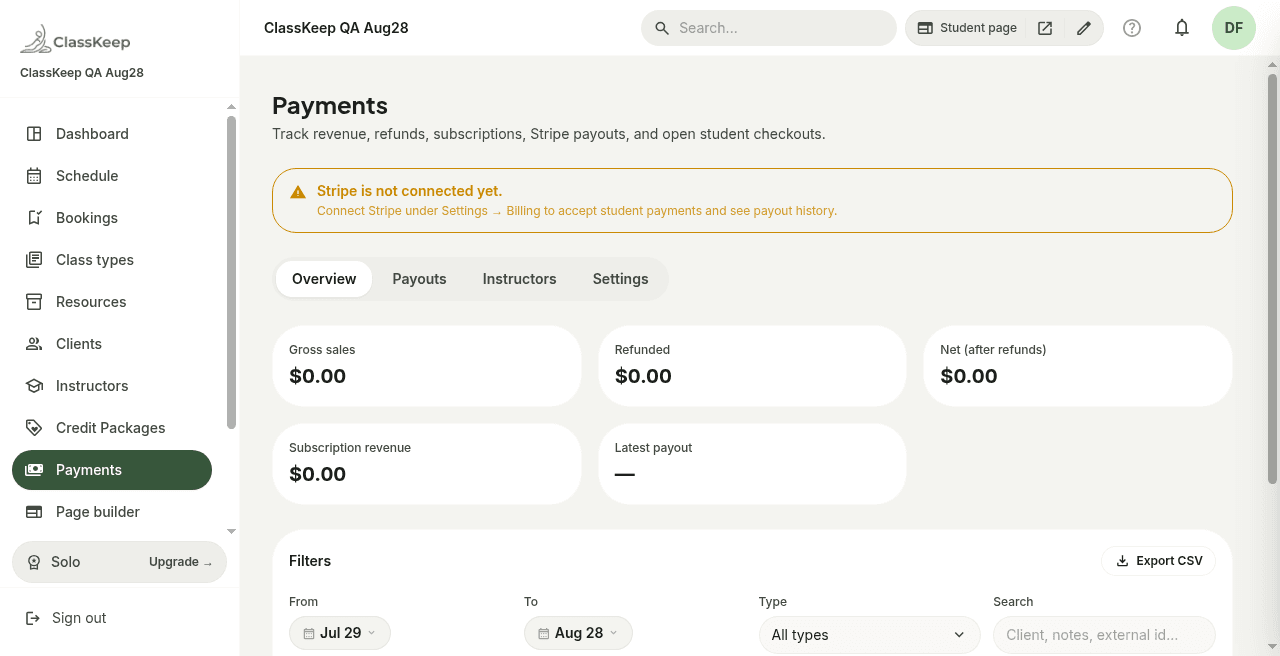
Two ways class-based studios get paid
In simple terms:
- Credit packages — the client pre-pays for N classes, uses them whenever they want (often with an expiry). Revenue is recognized at purchase.
- Subscriptions — the client pays a recurring monthly fee for unlimited (or N-per-week) classes. Revenue is recurring and predictable.
Most modern studio billing software supports both. The decision is not "can I sell this?" — it is "which one should I push, and to whom?"
See credits and packages and subscription plans in the help center.
When credit packages win
Drop-in friendly clients
If your studio attracts walk-ins, travelers, and "I will come when I can" clients (yoga and pilates do this a lot), credit packs respect their reality. A 10-class pack with a 90-day expiry says: come when you can, you are not locked in.
Holiday and travel patterns
Subscriptions punish people who travel. If you are in a city with strong summer and December travel patterns (most of Europe and Brazil), credit packs survive holiday months without churn. People come back in February and use remaining credits instead of having quietly cancelled in November.
Cash-flow upside
A $120 10-class pack is $120 in your account today. The same client on a subscription pays $200/month — you need a full month to match pack revenue, and that assumes they do not churn. Packs are the fastest path to cash if you need it.
When subscriptions win
Reformer pilates and small-group commitment
If your product is reformer pilates, HIIT, or any small-group format where the same 10–15 people come 2–4 times a week, subscriptions match the behavior. Credit packs feel like friction for clients who would otherwise auto-rebook.
Predictable revenue
Subscriptions are how you build a revenue line you can plan against. You know your active member count, your churn, your MRR. Customer acquisition cost recovers faster because you are not waiting for them to buy a second pack.
Retention math
Subscription customers often stay longer — not always from loyalty, but from inertia. Cancelling a subscription is an active decision. Not re-buying a credit pack is a non-decision. Know which side of friction you want.
The hybrid model (and why ClassKeep is built for it)
The studios that grow the fastest do not pick. They sell both:
- Unlimited or N-per-week subscription for committed regulars
- Class packs for drop-in and "come when I can" clients
- Single drop-in for first-timers and visitors
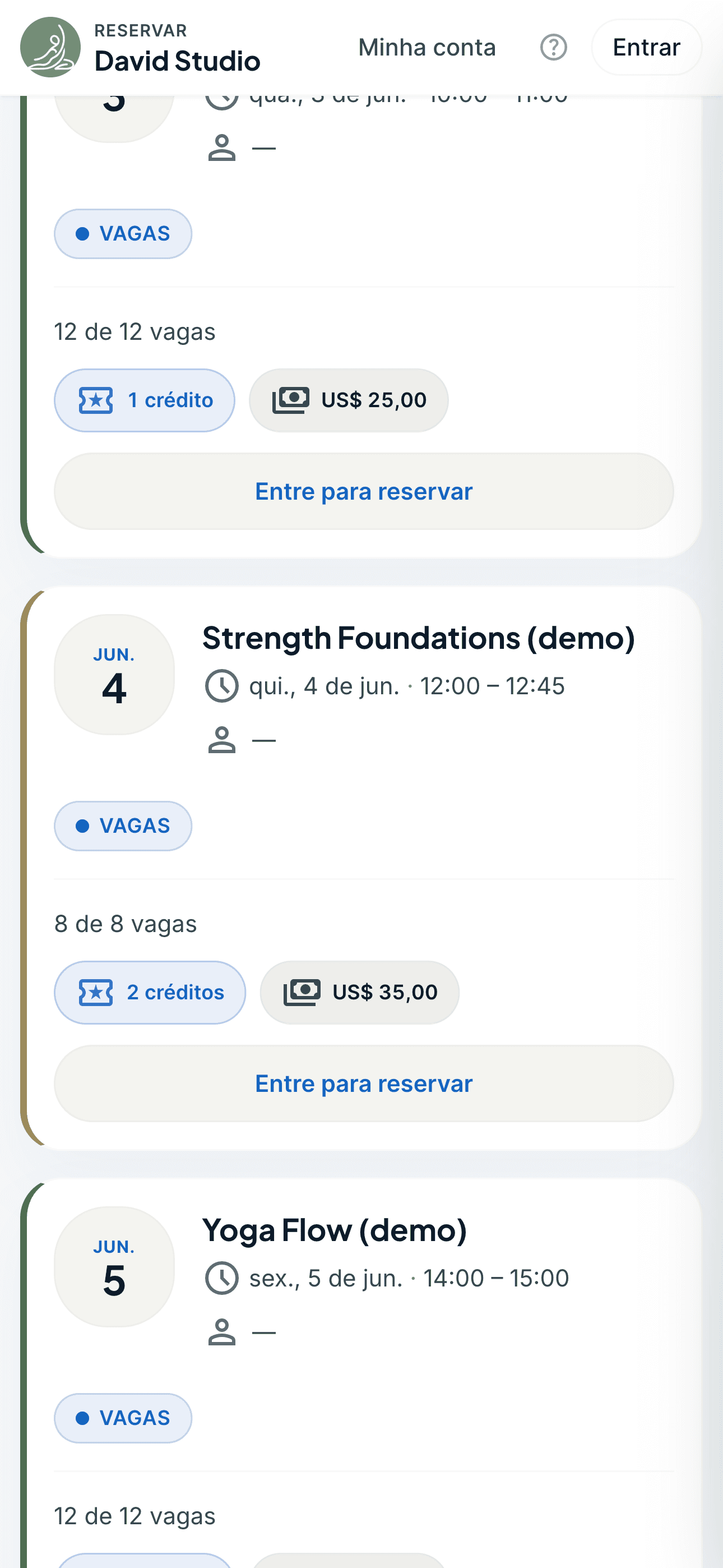
The risk with a hybrid model is reconciliation. Good studio billing software handles this automatically: when a client books, the system prefers subscription first, then credits, then drop-in payment. The client never picks; the system picks for them.
This is how the ClassKeep credit + subscription wallet works. Both balances live together, the booking flow chooses correctly, and your dashboard shows MRR (from subscriptions) and per-class revenue (from credits and drop-ins).
Pricing in BRL vs USD — patterns we see
A few patterns from reformer pilates and yoga studios in Brazil and the US:
- Brazil: hybrid wins most often. Class packs of 8–12 sessions, plus a 2x/week subscription for committed clients. Prices in BRL; many owners still prefer PIX for one-time pack purchases outside Stripe.
- United States: subscription-first more common in pilates. Unlimited around $200–280/month, plus 10-class packs for the "not sure yet" client.
- Europe (Portugal, Spain): closer to the BR pattern — packs dominate, subscriptions are a smaller second product.
Whatever the geography, the same principle holds: do not force every client into the same product. Let the wallet sort it out.
How to model your billing in ClassKeep
ClassKeep supports drop-in, credit packs (with expiry), and subscriptions (monthly or yearly) in one product, with Stripe Connect paying directly into your account. Model any pattern above and change your booking page without rebuilding the stack.
Related reading
- Choosing studio management software
- Pilates studio management software
- Student credits and subscriptions
- Pricing
Start your studio for free and try the model that fits your reality. You can change it next month.
Frequently asked
- Can I sell both credit packs and subscriptions at the same time?
- Yes — and most growing studios should. The booking flow should deduct subscription access first, then credits, then prompt for drop-in payment. Manual reconciliation is a sign the software is wrong for you.
- Which model has better cash flow?
- Credit packs bring cash upfront. Subscriptions spread revenue but improve predictability. Hybrid models balance both.
- Do subscriptions hurt retention during travel months?
- They can, in markets with strong summer or holiday travel. Credit packs with expiry often survive travel better — which is why many European and Brazilian studios lead with packs.
- Does ClassKeep charge extra for subscriptions?
- No. Credit packs, subscriptions, and drop-ins are included on every plan. ClassKeep charges a flat SaaS subscription — not a cut of each sale.
Ready to run your studio from one place?
Start free — no credit card required. Upgrade anytime.
Start for freeRelated articles
Software & tools
Punchpass alternative for boutique studios: an honest comparisonWhen Punchpass still fits a pass-based studio — and when you need room resources, subscriptions, instructor tools, and Stripe without outgrowing punch cards.Software & tools
Pilates studio management software: what reformer studios actually needA practical guide to pilates studio software — reformer scheduling, room resources, instructor coverage, credits, Stripe payments, and honest tradeoffs without enterprise bloat.Software & tools
Best alternatives to Mindbody: why boutique studios are switchingAn honest look at Mindbody for enterprise operators — and why single-location pilates, yoga, and class studios often prefer lighter tools like ClassKeep.