Industry insights
Yoga studio scheduling software: schedule, rooms, and revenue in one place
What boutique yoga studios should look for in scheduling software — recurring classes, prop resources, instructor coverage, late-cancel policy, and Stripe packs without enterprise overhead.
Yoga studios look simple from the outside: a timetable on the wall and mats on the floor. Operators know better. You juggle recurring class types, substitute teachers, workshop weekends, prop storage, and a revenue mix of unlimited memberships, class packs, and drop-ins — often while answering "do I still have credits?" in Instagram DMs.
Yoga studio scheduling software should reduce Sunday-night admin, not add another dashboard nobody opens. Here is what I would actually evaluate before signing a contract.

Scheduling: more than a pretty calendar
Your software should handle:
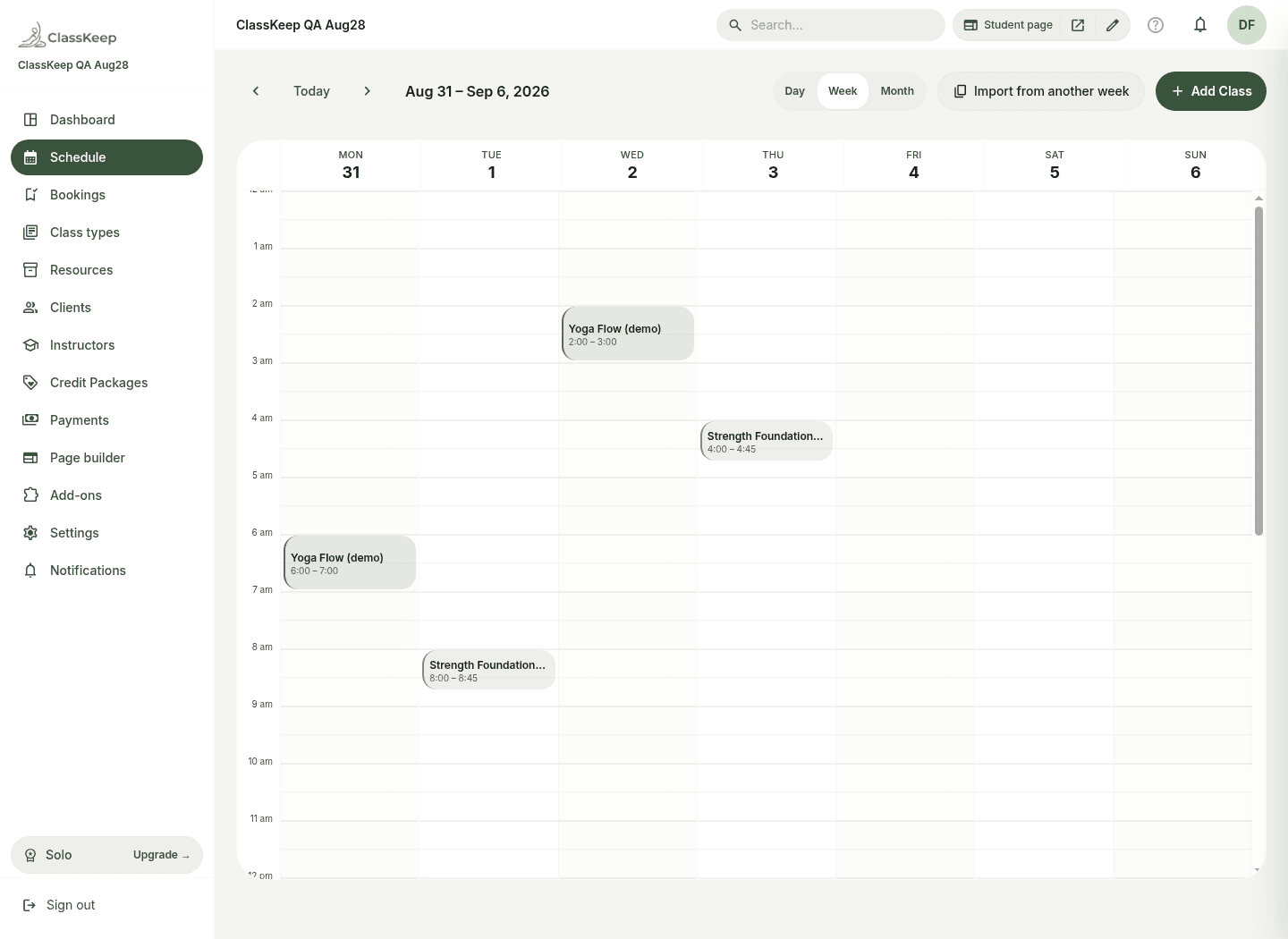
- Recurring class types (vinyasa, yin, prenatal, rocket) with stable times and copy-week when the semester is set
- Capacity per room — especially if you share one shala between programs or run privates beside group class
- Instructor assignment and cover swaps without breaking the public booking page
- Workshops and events beside your weekly grid — same tool, one checkout flow
If workshops are a revenue line, you should not need a separate Eventbrite link that never syncs with your credit ledger.
Resources: rooms and props
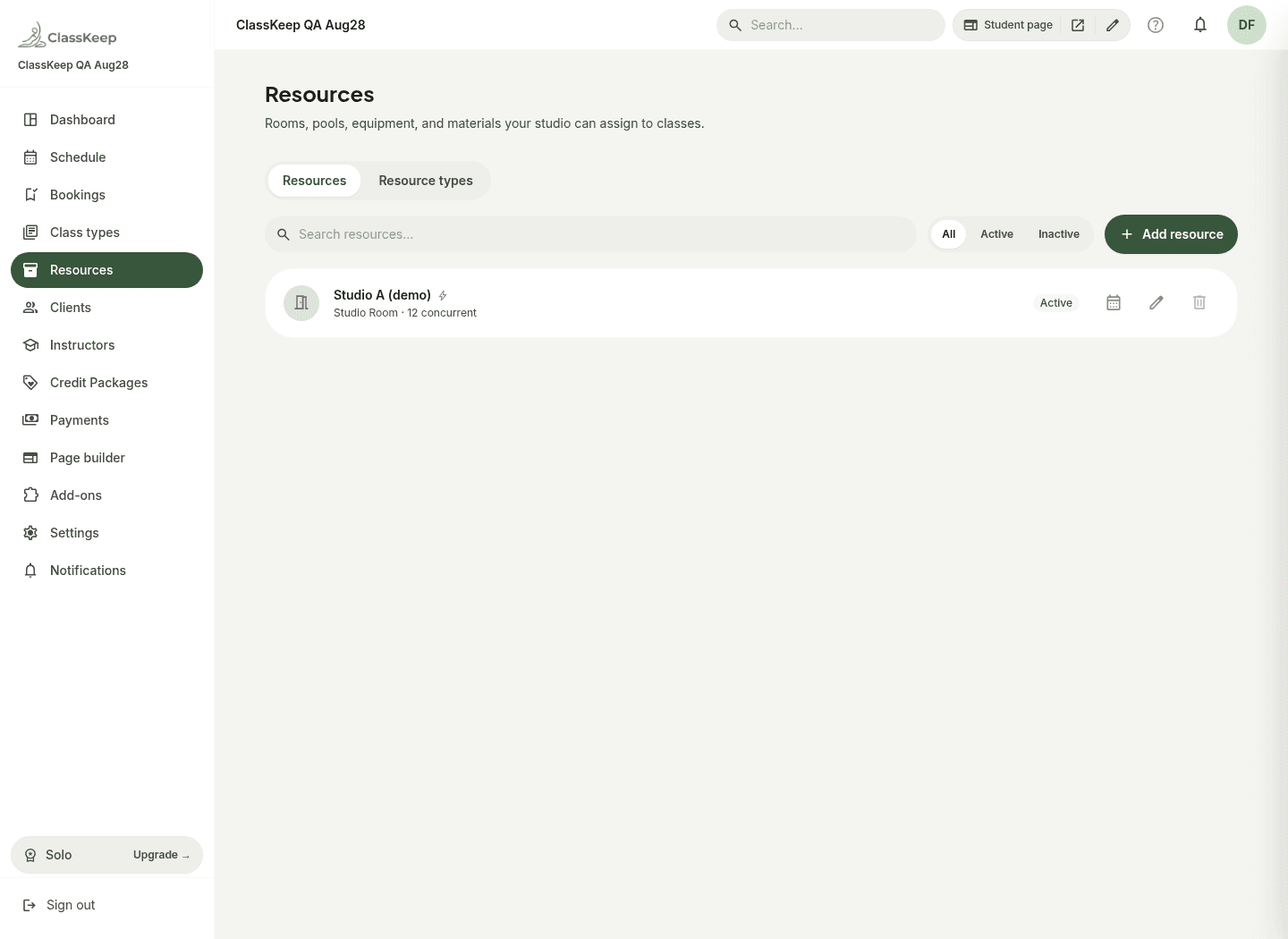
Even mat-based studios share wall space, bolsters, and blocks. Modeling rooms as resources prevents double-booking when a teacher schedules an overlapping private while group class is running.
Studios with multiple rooms benefit even more — hot room vs. regular studio, aerial silks vs. open floor. The rule is simple: if two sessions cannot physically happen at once, the software should know that.
Instructors, attendance, and late cancel
Teachers should check students in from a phone, mark no-shows for your policy, and add walk-ins without emailing admin. A lightweight instructor portal keeps the front desk off WhatsApp during class.
Your late-cancel and no-show policy should surface at booking — not buried in a PDF. When someone cancels inside the window, credits should return (or not) according to rules you set once, not case-by-case DMs.
Clients and revenue
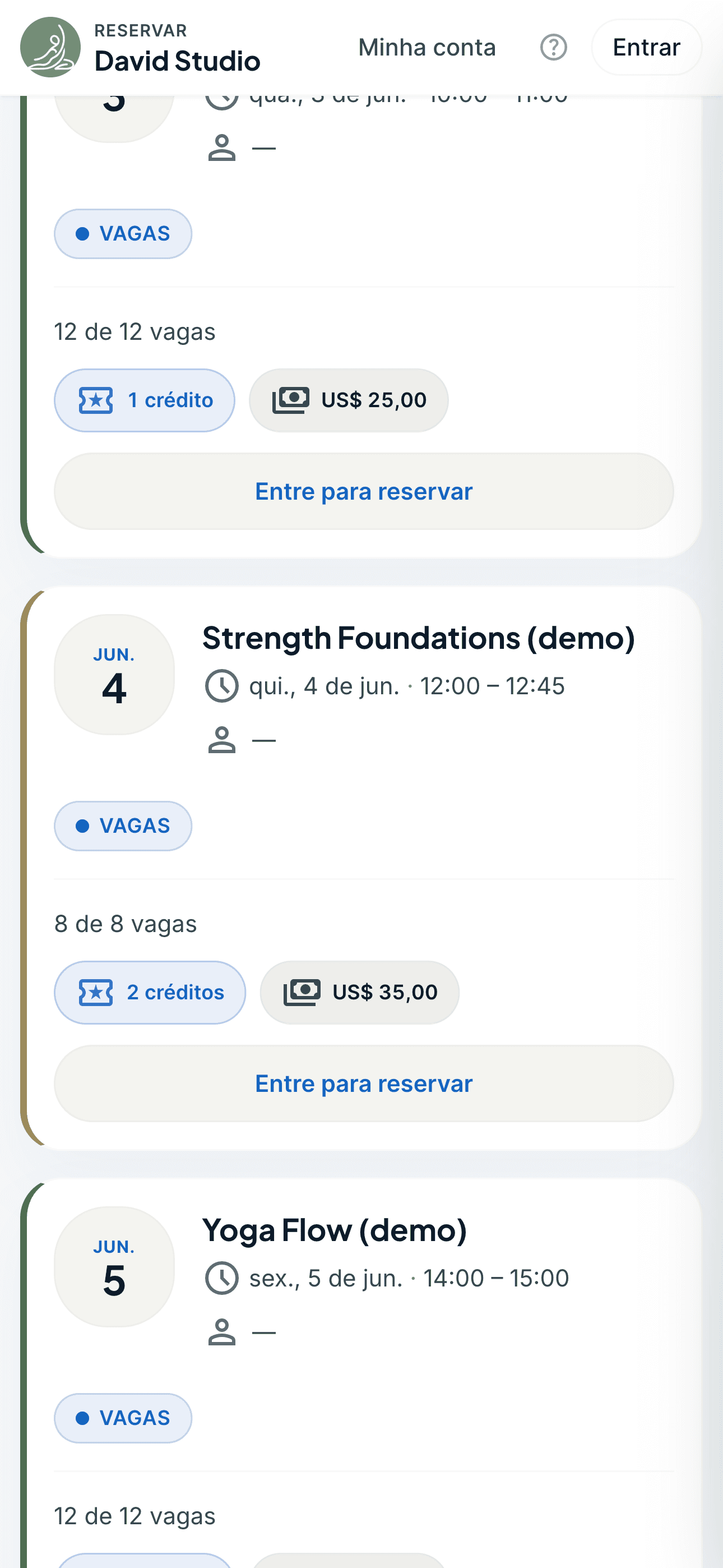
Yoga businesses typically sell:
- Monthly unlimited memberships
- 5- or 10-class packs with expiry
- Intro offers and drop-ins
Stripe Connect checkout should fulfill credits automatically. The platform should not take a percentage of every class sold. Read credit packages vs subscriptions if you are still deciding how to price.
Teacher payouts and reporting
If you pay per class or per head, you need attendance tied to instructor reports — not a spreadsheet export every Friday. Look for instructor earnings reports that teachers can see in their own portal.
For owner reporting: attendance trends, revenue by product (pack vs. subscription vs. drop-in), and no-show patterns matter more than vanity dashboard charts.
Optional retention tools
Email reminders help reduce no-shows. An optional waitlist can fill spots when someone cancels — useful for Tuesday 7pm vinyasa, not the center of your stack. SMS is usually a bring-your-own Twilio integration, not built-in chat.
ClassKeep for yoga studios
ClassKeep covers the core stack for boutique yoga:
- Week schedule with recurring classes and capacity
- Room and prop resources
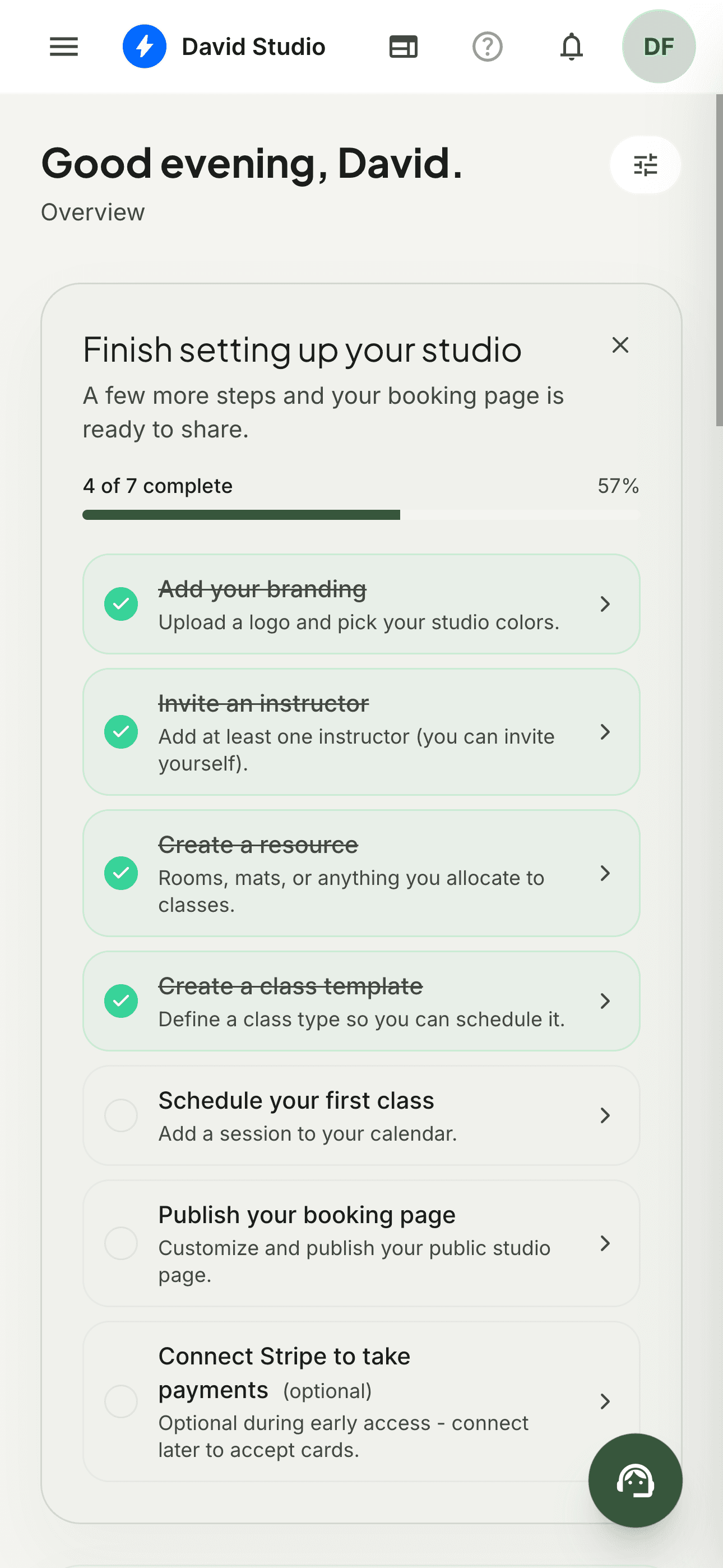
- Instructor portal with attendance
- Credit packs, subscriptions, and drop-ins via Stripe
- English and pt-BR
- Optional waitlist; Twilio BYOK for SMS/WhatsApp
Explore the yoga studio use case or compare ClassKeep vs Mindbody if you are leaving a legacy platform.
Related links
- Features
- Pricing
- Best alternatives to Mindbody
- Pilates studio management software
- Choosing studio management software
Get started free — no credit card required.
Frequently asked
- Do yoga studios need resource scheduling if classes are mat-based?
- Often yes. Even mat studios share wall space between group class and privates, or run hot room vs. regular studio on the same timetable. Modeling rooms prevents double-booking when programs overlap.
- Should yoga studios sell packs, subscriptions, or both?
- Most successful boutiques run a hybrid: unlimited or 2x/week membership for regulars, class packs for travelers and 'come when I can' clients, and a drop-in for first-timers. Your software should handle all three in one wallet.
- How do instructor payouts work in studio software?
- Look for per-class attendance tied to instructor reports — either flat per-head rates or revenue share. Teachers should see earnings in their portal without access to your Stripe dashboard.
- Is a waitlist essential for yoga studios?
- Helpful for popular slots, but secondary. Schedule, room capacity, instructor coverage, and payments are the daily work. Waitlist fills cancellations when you turn it on — it should not be the product headline.
Ready to run your studio from one place?
Start free — no credit card required. Upgrade anytime.
Start for free